By the time the Republican National Convention ends in early September, we as a country will have been intensely "iconed" for nearly a month. It started with the Olympics in Beijing in the middle of August and won't end until Sept. 5. In actuality, it may not end until the November elections, since the race is close and each side will do their best to claim their nearness to the icons we as a nation hold dear.
Unless you're in the political business or the marketing business, you probably don't think about icons very much. By definition they are ingrained in our subconscious and don't emerge unless triggered by an event or an emotion. But most countries, states, organizations and companies have them. Their leaders know them well and know when to call upon them in order to unify the nation, state or group. Companies use them to tap purchasing decisions.
When the United States was in its formative years and even into the early 20th century, natural resources had a good "share of mind" as national icons. The oceans, the forests and even the rivers held imagery and attributes that most of the country recognized immediately upon mention of their names. They were imbued with a sense of national pride and solidarity in much the same way we currently admire and feel predisposed toward certain sports figures, political heroes and old time movie idols.
But as technology and urbanization became dominant in our lives, America's natural icons gave way to more urban ones, like sports teams, city skylines and movie heroes like Batman and Indiana Jones. Closer to home, our sub conscience is overloaded with brand information - a form of iconization - that we use to make purchasing decisions every day. It's no wonder we no longer have a visual, iconic image of the Mississippi River and other natural resources when we hear their names.
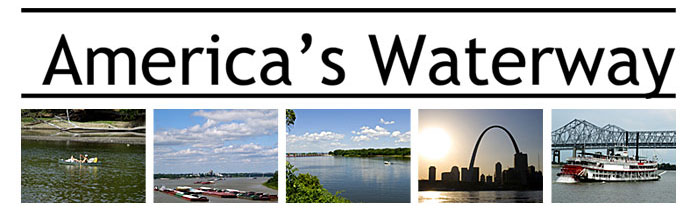
This is why America's Waterway came into being. Our goal is to unify the Mississippi River so that a natural constituency for the River - the people who live on all 2,340 miles of it as well as those who don't - recognizes it as valuable, shares a common understanding of it and feels that it embodies a part of their lives as Americans. Why? Because in the U.S., in order to address policies and practices for the River, we need a constituency that will take action on the River's behalf.
Establishing a shared understanding of the Mississippi River is a first step and a major part of America's Waterway's vision. We are looking for those among you who may share our interest in finding that shared vision, or may be interested in seeing a constituency for Mississippi evolve out of electronically linking the River's communities. We hope you will contact us if you have ideas how this could happen, or if you just want to join with us in this effort. Our current web site outlines how this might be achieved, but we're interested in hearing what you think.
|